

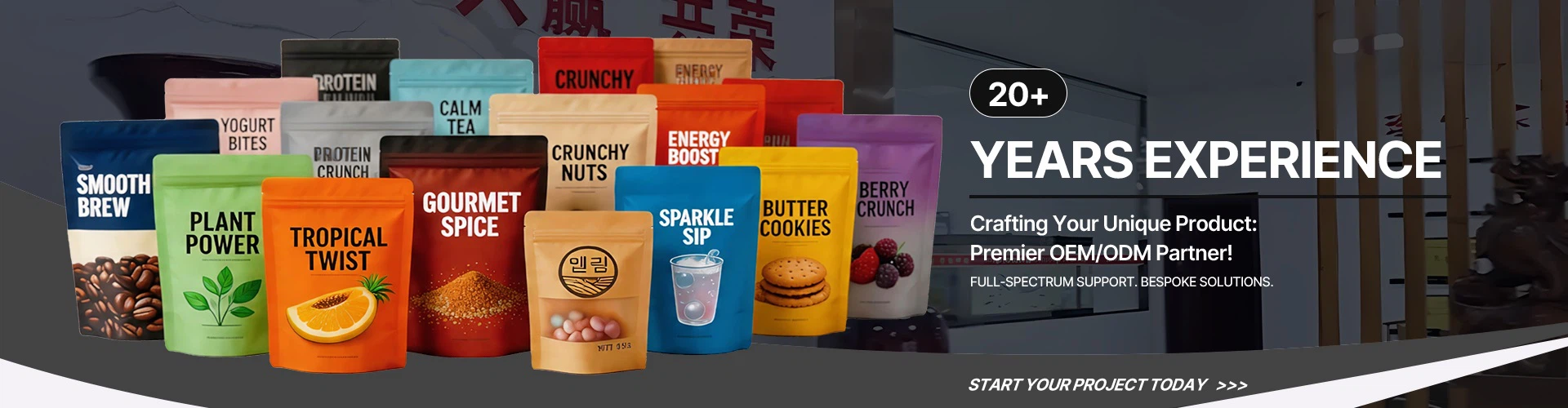
As a common form of flexible packaging, flat bottom bag plays an important role in foreign trade exports in many industries such as food, chemical industry, and daily necessities. Its unique design and functionality make it the first choice for many product packaging. This article will analyze the advantages of flat bottom bags and their importance in foreign trade packaging from the aspects of working principle, structural characteristics and application scenarios.
Working principle of flat bottom bag
The core working principle of flat bottom bag lies in the support structure at the bottom, which enables it to be placed upright for easy storage and display. Unlike traditional three-side sealed bags, the bottom of flat bottom bag adopts heat sealing or stitching process to form a flat support surface, ensuring that the bag can remain in a stable upright state after loading the product. This design not only improves the display effect of packaging, but also facilitates stacking and transportation, saving storage space.
Flat bottom bags are usually made of multi-layer composite materials, including materials such as polyethylene (PE), polypropylene (PP) or aluminum foil to enhance their barrier properties. The outer layer material provides tear resistance and abrasion resistance, while the inner layer ensures compatibility with the product to prevent chemical reactions or contamination. In addition, the flat-bottom bags have various sealing methods, such as heat sealing, zipper sealing or self-sealing, to meet the packaging needs of different products.
Structural characteristics of flat-bottom bags
The structural design of flat-bottom bags makes them superior to ordinary packaging bags in terms of functionality. The heat sealing process at the bottom ensures the tightness and prevents the contents from leaking or getting wet. At the same time, the sides and top of the bag are usually made of high-strength materials to withstand the pressure during transportation. Some flat-bottom bags are also equipped with vents or easy-tear openings for user convenience.
In foreign trade packaging, the standardized size and customizable design of flat-bottom bags enable them to adapt to the packaging needs of different products. Whether it is liquid, powder or solid products, flat-bottom bags can provide reliable packaging solutions. In addition, its environmental protection and recyclability also meet the requirements of the international market for sustainable packaging.
Application scenarios and market prospects
Flat-bottom bags are widely used in foreign trade exports in the fields of food, chemicals, and medicine. Its upright display characteristics make it more attractive on supermarket shelves, while its sturdy structure ensures the safety of long-distance transportation. With the rapid development of global e-commerce and logistics industries, the market demand for flat-bottom bags continues to grow, becoming an important choice in the field of foreign trade packaging.
In the future, with the advancement of material technology, flat-bottom bags will develop in a lighter and more environmentally friendly direction, further enhancing their competitiveness in the international market.