

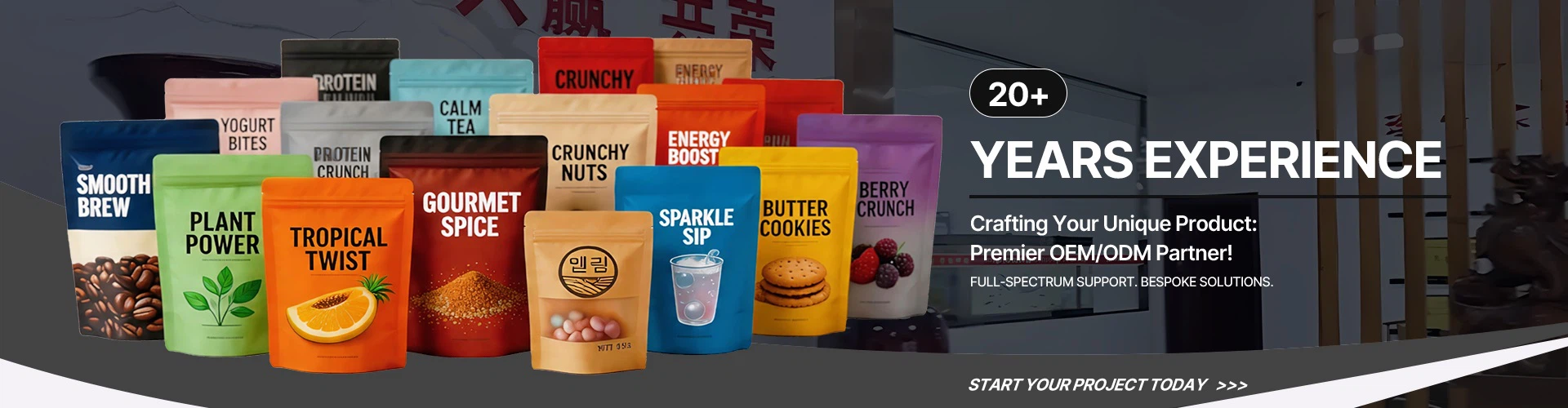
As an important product in the packaging industry, flat-bottom bags are widely used in food, daily chemicals, industry and other fields. Its production process involves multiple links, from raw material selection to finished product delivery, each step requires strict control of quality and efficiency. This article will introduce the production process of flat-bottom bags in detail to help foreign trade practitioners and industry professionals to have a deeper understanding of the technical details of this product.
The main raw materials of flat-bottom bags are usually plastic particles such as polyethylene (PE) and polypropylene (PP). Before production, it is necessary to select suitable raw materials according to the purpose of the product and dry them to ensure the stability of subsequent processing. After the raw materials are prepared, they enter the extrusion molding stage.
Extrusion molding is one of the core links in the production of flat-bottom bags. Plastic particles are heated and melted by an extruder to form a uniform melt, which is then extruded into a tubular film through a die. This process requires precise control of temperature, pressure and speed to ensure that the film thickness is uniform and there are no bubbles or defects. The extruded film is shaped by a cooling roller to form a stable substrate.
The next step is printing. Flat-bottom bags usually need to be printed with patterns or text to enhance product recognition. Printing methods include gravure printing, flexographic printing, etc., and the appropriate process needs to be selected according to customer needs. Before printing, layout design is required, and the ink adhesion is strong and the color is bright. After printing, the film needs to be dried to prevent the ink from drying and affecting subsequent processing.
Slitting and bag making are the last stages of flat-bottom bag production. The printed film is cut into the required width by a slitting machine, and then folded and heat-sealed by a bag-making machine to form a flat-bottom structure. The heat-sealing temperature and time need to be precisely controlled to ensure that the bag mouth is firmly sealed, while avoiding deformation of the film due to excessive heating.
Finished product inspection is an indispensable link. Flat-bottom bags need to undergo appearance inspection, size measurement, sealing test, etc. to ensure that they meet quality standards. Qualified products can be shipped after packaging and supplied to domestic and foreign markets.
The production process of flat-bottom bags reflects the refinement and efficiency of modern packaging technology. Understanding this process will help foreign trade companies better control product quality and enhance market competitiveness.